
Direct answer
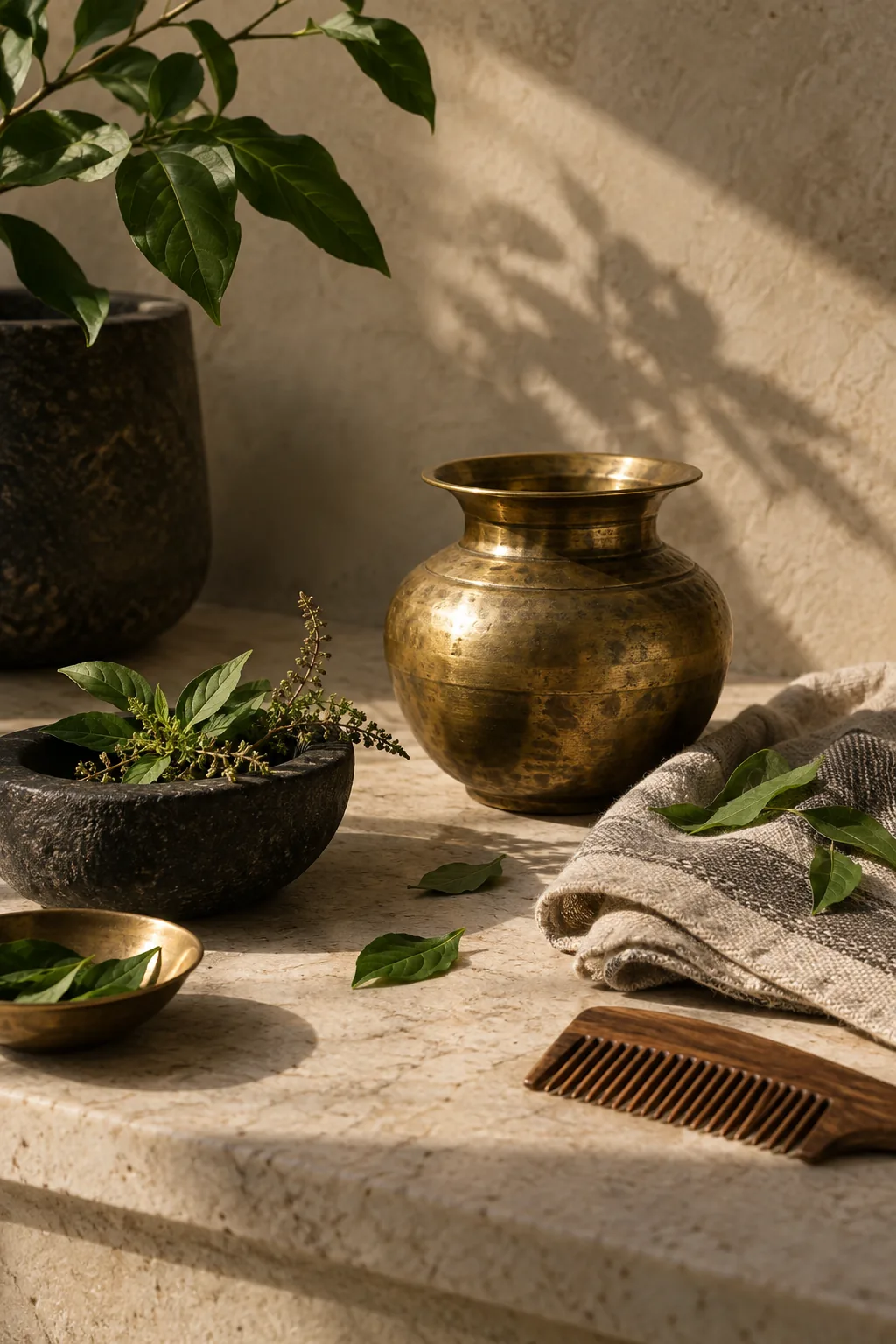
Scalp massage is a grooming and touch practice found in many care traditions, including Indian hair-oiling rituals. It may feel pleasant, but it is not a proven cure for hair loss, headache, stress disorders or scalp disease.
The 7-Chakra Reset is a 30-day meditation guide ($9.99 PDF).
Touch with attention
Use light pressure that feels comfortable. There is no need to force movement, pull hair or continue through pain. A few moments while applying a cosmetic product or brushing hair may be enough. The practice should be optional; some people find scalp touch uncomfortable or have sensitivities that make it unsuitable.

Do not ignore symptoms
Pain, lesions, itching, flaking, bleeding, sudden shedding or changes in the scalp deserve appropriate assessment when persistent or concerning. A massage cannot determine the cause. Avoid applying products to damaged skin and do not share combs or applicators where hygiene is a concern.
Honest product language
If oil is used, choose one intended for hair or skin, read the ingredients and directions, and stop if irritation occurs. Be sceptical of claims that a massage sequence or botanical blend will guarantee growth, cure dandruff or change hormones. A clear cosmetic description is more trustworthy than a dramatic promise.
Conclusion
Scalp massage can remain a small ritual of care when it is gentle, consensual and honest about its limits. The tradition is not diminished by refusing claims it cannot establish.
A measured technique
Use fingertips rather than nails and keep pressure light. Work briefly around an area, then pause and notice whether it remains comfortable. There is no need to follow a prescribed number of strokes or claim that a sequence changes a body system. Gentle attention is enough.
Hygiene and tools
Wash hands before touching the scalp, keep brushes and combs clean and do not share tools if there is a risk of infection. Oil is optional; if used, choose a product intended for the area and remove it according to its directions. These small precautions make a familiar ritual more considerate.
When not to continue
Skip scalp massage after a recent injury or procedure unless a qualified professional has advised otherwise. Stop with pain, dizziness, irritation or discomfort. The appropriate response to a worrying symptom is assessment, not persistence.
Keep expectations honest
Pleasant touch can be enough of a reason to continue. It need not be sold as a mechanism for changing a disease, a mood disorder or a hair pattern. The more specific a health claim becomes, the more specific and credible its evidence must be.
A final check
After the ritual, wash hands, clean any tools and notice how the scalp feels. Comfort is the guide. If it is not comfortable, there is no benefit in trying to push through.
Let the ritual stay ordinary
There is no need to schedule scalp massage every day or buy a special tool. A brief, comfortable touch during normal grooming is enough. The practice can be skipped entirely whenever the scalp feels sensitive, the day is rushed or it simply does not appeal. Respecting these limits keeps care voluntary and safe.