
Direct answer
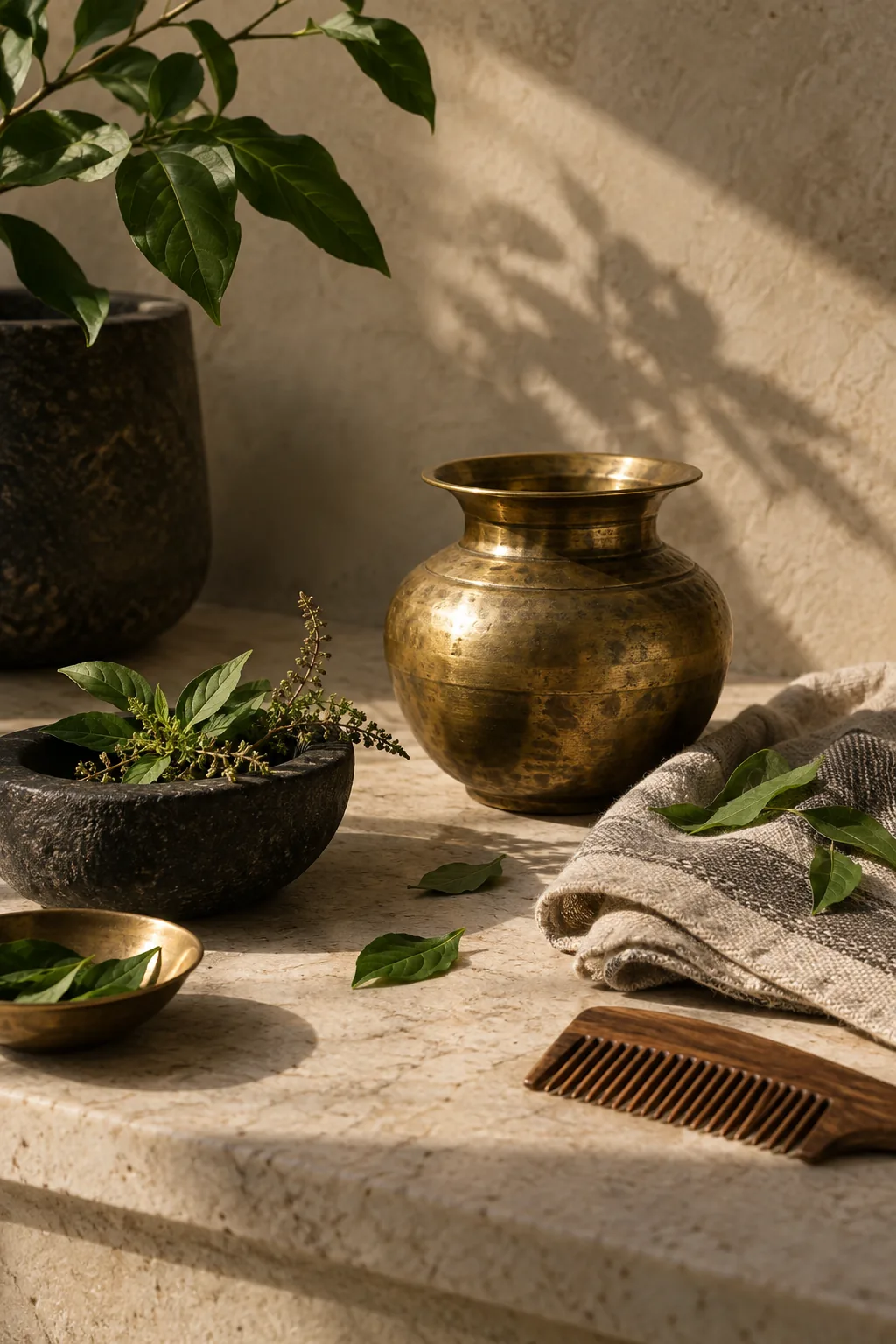
Abhyanga is an Ayurvedic term commonly used for oil massage. In contemporary life, it may be approached as a cosmetic and sensory self-care ritual. It is not a substitute for diagnosis, physical therapy or medical treatment.
The 7-Chakra Reset is a 30-day meditation guide ($9.99 PDF).
A tradition, not a promise
Oil has a long place in Indian care practices: in bathing, hair care, hospitality and massage. Abhyanga is often discussed within wider Ayurvedic daily routines. That context can be meaningful, but it should not be turned into a claim that a particular oil cures pain, fixes sleep or removes toxins. The National Center for Complementary and Integrative Health cautions that evidence for many Ayurvedic approaches remains limited and variable.

Keep the practice modest
For someone who wants a simple ritual, the relevant questions are practical. Is the product intended for skin? Are its ingredients visible? Does it have directions and warnings? Can it be used without creating a slip hazard, staining textiles or irritating skin? A small amount on hands, arms or feet may be enough for an ordinary moment of care. Follow cosmetic directions and patch-test if appropriate.
Boundaries matter
Do not massage broken, infected, inflamed or painful skin without appropriate advice. Avoid using fragranced products around people who may be sensitive, and stop if irritation occurs. Persistent pain, swelling, numbness, injury or unexplained symptoms deserve professional assessment rather than a new ritual.
Material honesty
A product marketed for abhyanga should say what it is: an oil or cosmetic product, its ingredients, quantity, use and warnings. It does not need invented medical authority to be valuable. Texture, scent, application and the feeling of an unhurried transition are honest reasons to choose a product.
Conclusion
Abhyanga can offer a language for intentional touch and everyday care. Keep it gentle, informed and separate from the treatment claims a general product page cannot support.
A practical way to approach the ritual
Choose a clean towel, a small amount of product and enough time to avoid rushing. Apply only where the label permits, then allow the body to settle before dressing. This framing makes the practice usable in an ordinary home. It also avoids the idea that more product, more pressure or more time is automatically better.
Consider the environment
Oil can transfer to furniture, bedding and floors. Keep the container closed, use a washable surface and wash hands afterwards. In a shared household, scent and texture may affect other people. A respectful ritual includes their comfort as well as your own.
What tradition contributes
The value of abhyanga need not be measured by a clinical promise. A recurrent touch practice can give a person a way to notice dryness, tension or simply the end of a day. That attention belongs to the experience; it does not establish a diagnosis. If a concern persists, the next step is suitable professional care, not a stronger version of the same ritual.